8 Best Voice AI Tools and Platforms in 2026
The market has exploded with options — and the quality gap between the best and worst tools is enormous. This guide covers the 8 best voice AI tools and platforms available in 2026, what each one does best, and how to choose the right one for your use case.
What Can Voice AI Do in 2026?
Modern voice AI covers several distinct capabilities that are worth separating before diving into the tools:
- Text-to-speech (TTS): Convert written text into natural-sounding spoken audio
- Voice cloning: Create a synthetic version of a specific person's voice from a short audio sample
- AI voice assistants: Conversational agents that listen, understand, and respond in real time
- Real-time voice synthesis: Generate speech with low enough latency for live conversations
- Speech-to-speech: Transform the tone, accent, or identity of a live voice in real time
- Voice agents: AI systems that can hold a full phone conversation autonomously
1. ElevenLabs — Best Overall Voice AI Platform
Developer: ElevenLabs Price: Free tier available, paid plans from $5/month Best for: Content creators, developers, businesses needing high-quality TTS and voice cloning
ElevenLabs is the most widely used and most technically impressive voice AI platform available in 2026. It produces text-to-speech output that is consistently the most natural-sounding in the market — capturing emotion, pacing, and intonation in a way that genuinely surprises first-time users.
Its voice cloning feature is equally impressive. From as little as one minute of audio, ElevenLabs can create a synthetic clone of any voice that maintains the speaker's unique characteristics across long-form content. Professional voice cloning with higher samples produces results that are extremely difficult to distinguish from the original.
Key features:
- Text-to-speech: Industry-leading naturalness and emotional range across 32 languages
- Instant voice cloning: Clone any voice from a short audio sample — as little as 1 minute
- Professional voice cloning: Higher-quality clone from longer samples for production use
- Voice library: 3,000+ pre-made voices across accents, ages, styles, and languages
- Speech-to-speech: Transform your live voice into any other voice in real time
- ElevenLabs Studio: Long-form audio production tool for audiobooks and podcasts
- Conversational AI: Build voice agents with low-latency real-time responses
- Developer API: Integrate into any application with low-latency streaming
Get started: elevenlabs.io
2. OpenAI Voice — Best for Conversational Real-Time Voice AI
Developer: OpenAI Price: Included in ChatGPT Plus ($20/month), API pricing separate Best for: Real-time voice conversations, customer-facing AI assistants
OpenAI's voice mode in ChatGPT — powered by the GPT-4o model with native audio capability — set a new standard for conversational voice AI when it launched. Unlike text-to-speech systems that convert written text to audio as a separate step, GPT-4o processes and generates audio natively, enabling conversations that feel genuinely natural — including the ability to interrupt, laugh, and respond to emotional tone.
In 2026, OpenAI's Realtime API brings this capability to developers who want to build their own voice-enabled applications. The latency is low enough for real conversational use, and the model understands context across a full conversation rather than treating each exchange as independent.
Key features:
- Native audio processing: Understands and generates audio directly — not text converted to speech
- Real-time conversation: Low latency responses suitable for live dialogue
- Emotional awareness: Detects and responds to tone, pacing, and emotion in the speaker's voice
- Interruption handling: Handles natural conversation flow including interruptions and overlapping speech
- Multiple voice modes: Several built-in voice personalities available
- Realtime API: Build custom voice applications with the same underlying capability
- Function calling: Connect voice conversations to tools and external systems
Get started: platform.openai.com
3. Murf AI — Best Voice AI for Business Presentations and E-Learning
Developer: Murf Inc. Price: Free tier available, paid plans from $19/month Best for: Corporate training, e-learning content, marketing videos, presentations
Murf AI is purpose-built for professional business content — the kind of voiceover work that previously required hiring a voice actor or spending hours in a recording studio. It offers a clean studio interface where you paste your script, select a voice, and adjust pacing, pitch, and emphasis — producing professional voiceover audio in minutes.
It is particularly strong for e-learning and corporate training content, where consistent, clear narration across dozens of modules is more important than highly expressive emotional range.
Key features:
- 120+ AI voices: Professional-grade voices across 20+ languages and multiple accents
- Voice customisation: Adjust pitch, speed, and emphasis at the word or sentence level
- Script editor: Built-in editor with pronunciation correction and pause control
- Video sync: Upload a video and sync the AI voiceover directly to the timeline
- Team collaboration: Multiple team members can work on the same project
- Voice cloning: Clone your own voice for consistent branded narration
- Royalty-free background music: Add music to voiceover projects from a built-in library
Get started: murf.ai
4. Bland AI — Best Voice AI for Automated Phone Calls
Developer: Bland AI Price: $0.09 per minute, enterprise pricing available Best for: Businesses automating inbound and outbound phone calls at scale
Bland AI specialises in a specific but high-value use case: autonomous AI phone agents that can hold complete, natural phone conversations. These are not the robotic IVR systems of a decade ago — Bland's agents respond in under 400ms, handle interruptions naturally, and can navigate complex multi-turn conversations about real topics.
Businesses use it to handle inbound customer support calls, schedule appointments, conduct outbound sales outreach, run survey calls, and qualify leads — at a fraction of the cost of human agents and with no hold times.
Key features:
- Sub-400ms response latency: Fast enough to feel like a real phone conversation
- Custom AI voice: Build and deploy agents with a specific voice and personality
- Dynamic data injection: Inject live customer data, account details, and context into calls
- Call transfers: Transfer to a human agent when the conversation requires it
- Post-call analysis: Automatic transcription, summary, and structured data extraction from every call
- Webhook integration: Trigger actions in your CRM, calendar, or other systems based on call outcomes
- Inbound and outbound: Works for both incoming customer calls and automated outbound dialling
- Compliance tools: Built-in tools for TCPA and other calling regulation compliance
Get started: bland.ai
5. PlayHT — Best for Voice Cloning and Multilingual TTS
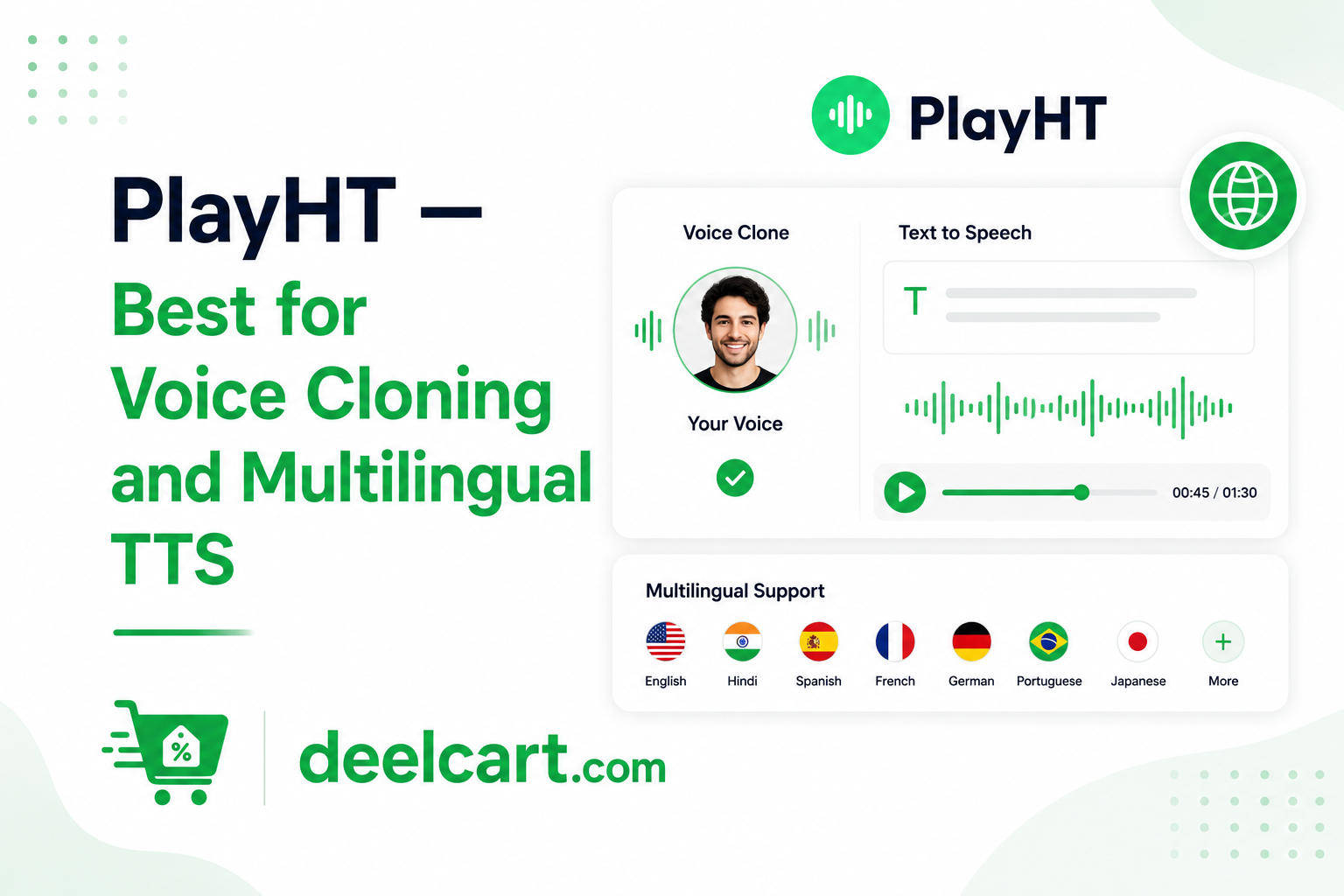
Developer: PlayHT Inc. Price: Free tier available, paid plans from $31.25/month Best for: Multilingual content, voice cloning, podcast production
PlayHT is a strong alternative to ElevenLabs with particular strengths in multilingual voice generation and an ultra-realistic voice cloning system that requires only 10 seconds of audio to create a usable clone. Its voice quality has improved significantly in 2026 and competes closely with ElevenLabs across most use cases.
Its PlayDialog model is designed specifically for conversational AI applications — producing the natural rhythm and pacing of real dialogue rather than the smooth but sometimes robotic cadence of standard TTS.
Key features:
- Ultra-realistic TTS: Natural-sounding speech across 142 languages and 900+ voices
- 10-second voice cloning: Clone any voice from just 10 seconds of audio
- PlayDialog model: Conversational AI voice model for natural back-and-forth dialogue
- Emotion and style control: Adjust speaking style, emotion, and delivery at the sentence level
- Streaming API: Low-latency audio streaming for real-time applications
- Podcast production: Multi-voice podcast generation from a written transcript
- Pronunciation library: Custom pronunciation dictionaries for technical or branded terms
Get started: play.ht
6. Cartesia — Best Voice AI for Low-Latency Real-Time Applications
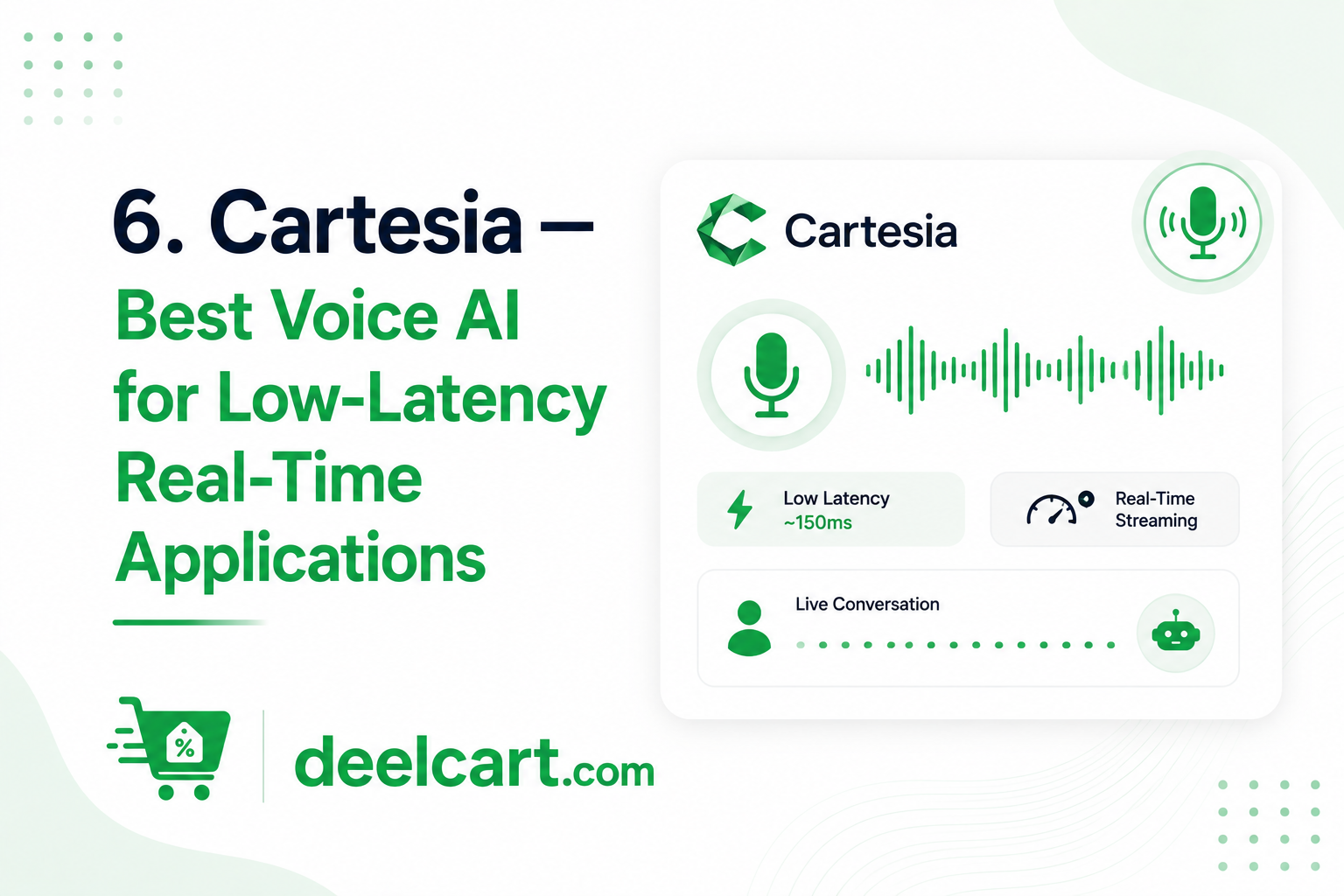
Developer: Cartesia AI Price: Free tier available, API pricing from $0.005 per second of audio Best for: Developers building real-time voice applications where latency is critical
Cartesia is built for developers who need the lowest possible latency in voice generation. Its Sonic model produces audio in under 90ms — significantly faster than most competitors — making it the best choice for real-time applications where any perceptible delay breaks the conversational experience.
It is not trying to be the most feature-rich platform. It is trying to be the fastest. For developers building voice agents, robotics applications, real-time translation, or any product where voice latency is the primary technical constraint, Cartesia is the tool to evaluate first.
Key features:
- Sub-90ms latency: Fastest commercially available TTS latency in 2026
- Streaming audio: Start receiving audio before the full text is processed
- Voice cloning: Create custom voices from audio samples
- Emotion and control tokens: Fine-grained control over speaking style within a generation
- 40+ languages: Multilingual support with consistent low latency across languages
- Simple API: Clean, developer-friendly API with extensive documentation
- Scalable infrastructure: Built for high-throughput production workloads
Get started: cartesia.ai
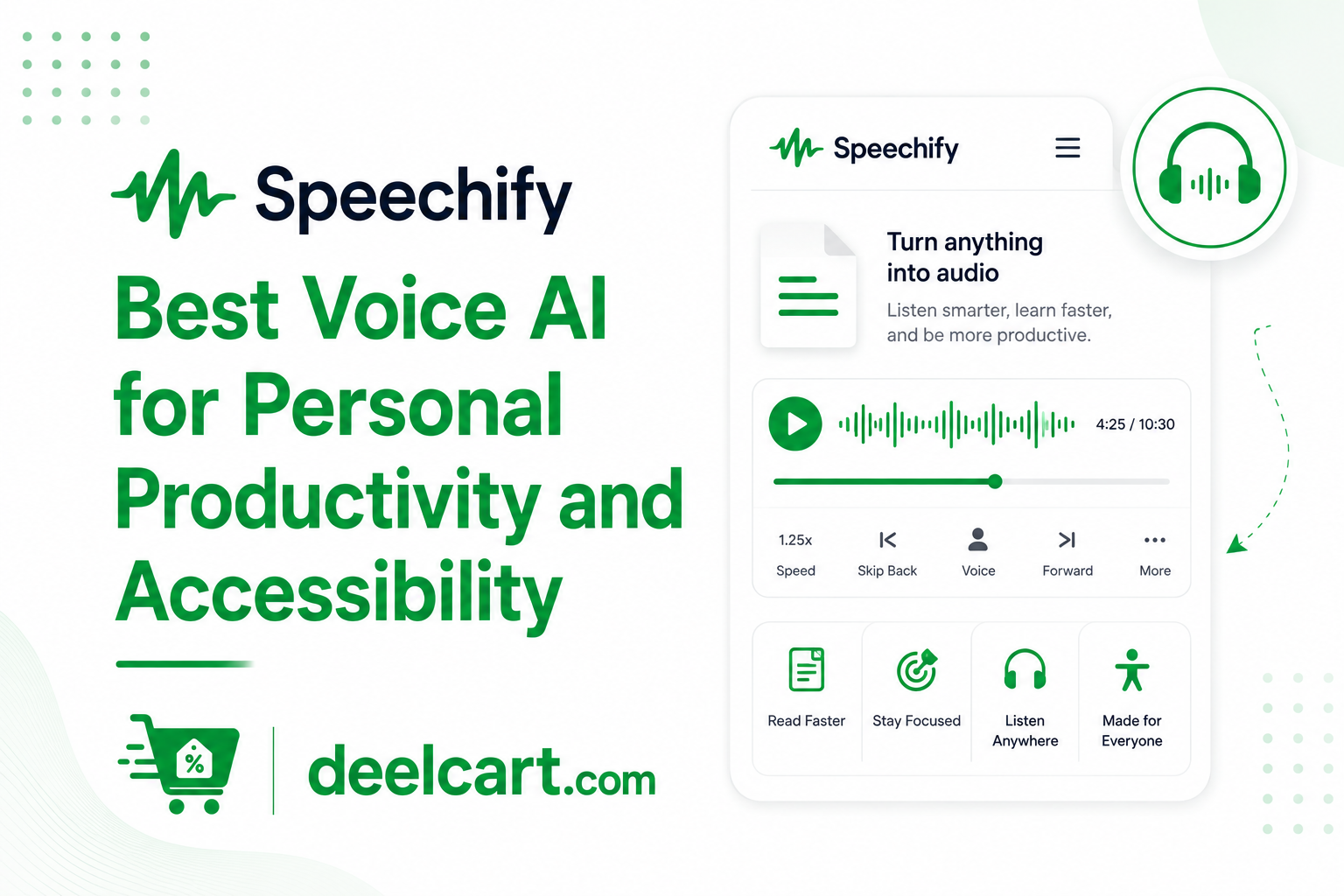
7. Speechify — Best Voice AI for Personal Productivity and Accessibility
 Productivity and Accessibility" style="max-width:100%;border-radius:8px;margin:16px 0;display:block;" />
Developer: Speechify Inc. Price: Free tier available, Premium from $139/year Best for: Reading assistance, accessibility, consuming long-form content by listening
Speechify takes a different angle from most voice AI platforms — instead of helping you create audio content, it helps you consume written content by listening to it. It converts any text — articles, PDFs, ebooks, emails, web pages — into high-quality audio you can listen to at up to 4.5x speed.
In 2026, Speechify has expanded beyond its reading-assistant origins into a full voice AI platform with TTS, voice cloning, and an AI voice studio for content creation.
Key features:
- Text-to-audio reading: Listen to any document, PDF, webpage, or ebook
- Speed control: Listen at up to 4.5x normal speaking speed with maintained clarity
- Celebrity voices: Licensed voices of well-known personalities for content listening
- Speechify Studio: Create voiceover content with 200+ AI voices
- Voice cloning: Clone your own voice for personal use
- Chrome extension: Convert any webpage to audio with one click
- Mobile apps: iOS and Android apps with offline support
- Accessibility features: Dyslexia-friendly features, text highlighting, and focus mode
Get started: speechify.com
8. Resemble AI — Best for Enterprise Voice AI and Custom Voice Infrastructure
Developer: Resemble AI Price: Custom enterprise pricing Best for: Enterprises needing custom voice infrastructure, deepfake detection, on-premises deployment
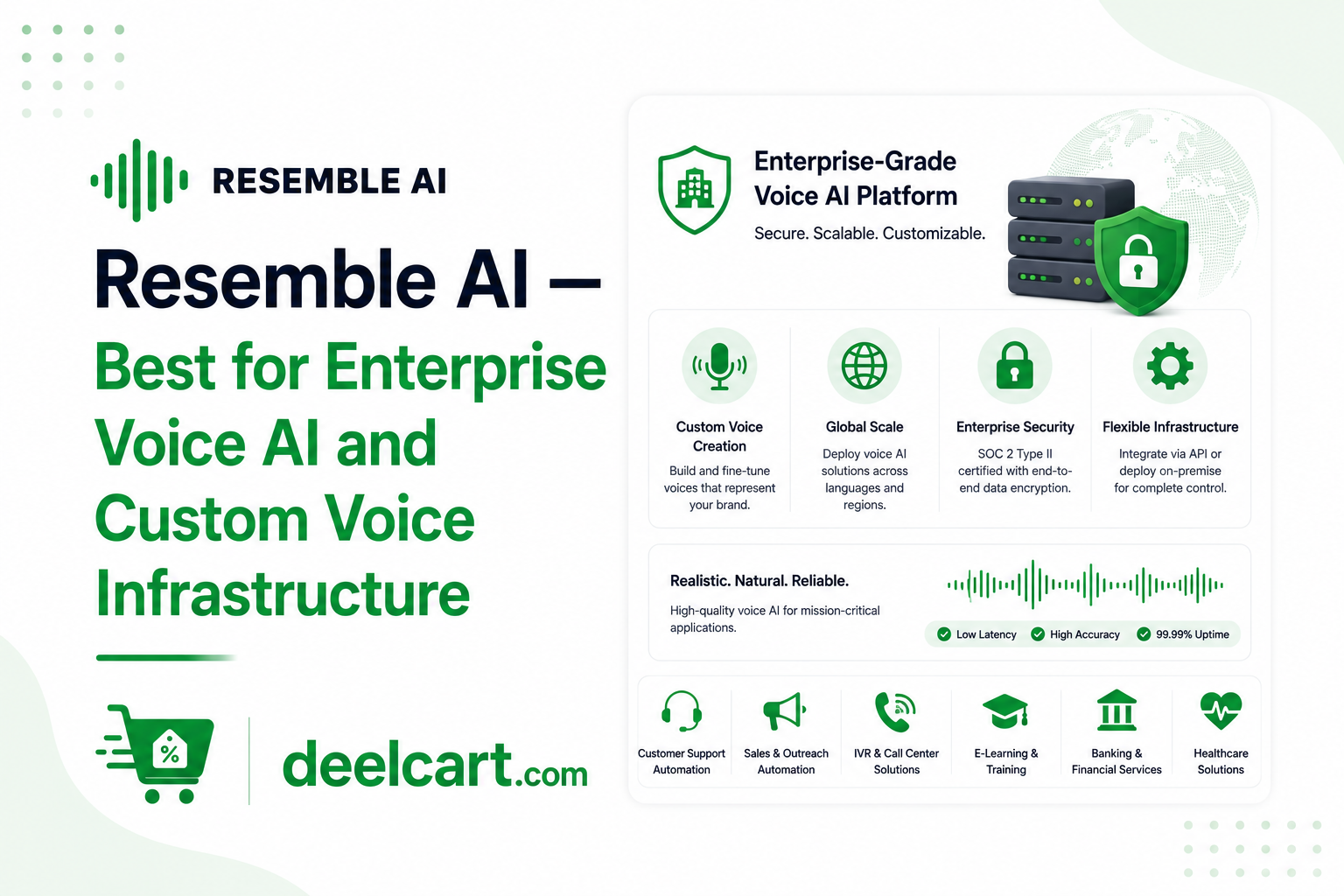
Resemble AI is an enterprise-focused voice AI platform that goes beyond standard TTS and voice cloning into territory most consumer-focused platforms do not cover — deepfake detection, watermarking of AI-generated audio, on-premises deployment, and custom voice model training for large organisations.
For enterprises with strict data security requirements, Resemble offers deployment inside your own infrastructure so voice data never leaves your environment.
Key features:
- Custom voice model training: Train a bespoke voice model on your own data
- Perceptual watermarking: Embed invisible watermarks in AI-generated audio for detection
- Deepfake detection: Detect AI-generated audio — important for fraud prevention and content verification
- On-premises deployment: Run entirely within your own infrastructure
- Real-time voice synthesis: Low-latency API for production voice applications
- Emotion AI: Fine-grained emotional control over generated speech
- Localization: Voice adaptation across languages while preserving speaker identity
Get started: resemble.ai
---
Which Voice AI Tool Should You Choose?
| Your Use Case | Best Choice |
|---|---|
| Best overall voice quality | ElevenLabs |
| Real-time conversational voice AI | OpenAI Voice |
| Business presentations and e-learning | Murf AI |
| Automated phone call agents | Bland AI |
| Multilingual content and voice cloning | PlayHT |
| Lowest latency real-time applications | Cartesia |
| Personal productivity and accessibility | Speechify |
| Enterprise custom voice infrastructure | Resemble AI |
For most individuals and small teams getting started with voice AI, ElevenLabs is the safest first choice — it has the best overall quality, the most generous free tier among the premium platforms, and covers the widest range of use cases from TTS to voice cloning to conversational agents.
For developers building real-time voice applications, evaluate Cartesia for latency-critical work and OpenAI Realtime API for conversational quality.
For businesses automating phone-based customer interactions, Bland AI is the standout specialist.
What to Look for When Evaluating Voice AI Tools
Before committing to a platform, test it against these criteria:
Audio naturalness: Does the generated voice sound like a real person or a robot? Listen for unnatural pauses, mispronounced words, and monotone delivery — these are common failure modes in lower-quality systems.
Latency: For real-time applications, anything above 300ms starts to feel awkward in conversation. Test the actual latency of the API, not just the headline number.
Voice cloning quality: If you need voice cloning, test with a sample from the actual speaker — not a demo. Quality varies significantly between platforms for different voice types.
Language support: If you need multilingual support, test the specific languages you need. Quality across languages varies widely — a platform that sounds great in English may struggle with Hindi or Portuguese.
Pricing model: Understand whether you are paying per character, per second of audio, per month, or per API call — and model out what your actual usage will cost at scale before committing.
API quality: If you are building, evaluate the API documentation, latency, streaming support, and reliability. A tool with great audio quality but a poorly designed API creates significant development friction.
Frequently Asked Questions
Which voice AI sounds the most realistic in 2026?
ElevenLabs consistently produces the most natural-sounding output in independent evaluations. Its emotional range, pacing, and intonation are the closest to human speech of any commercially available platform.
Can I clone my own voice with AI?
Yes. ElevenLabs, PlayHT, Murf, and several other platforms offer voice cloning from a short audio sample — typically 1 to 5 minutes for good results. Most platforms require you to confirm consent that you own or have permission to clone the voice being submitted.
Is voice AI legal to use?
Yes, with important caveats. Cloning your own voice is always permissible. Cloning someone else's voice without their consent is illegal in many jurisdictions and violates the terms of service of every reputable platform. Using AI voices for fraud, impersonation, or non-consensual content creation is both illegal and unethical.
How much does voice AI cost?
Costs vary widely. ElevenLabs starts free with 10,000 characters per month. Paid plans start at $5/month. Bland AI charges $0.09 per minute of phone call. Cartesia charges $0.005 per second of audio generated. Enterprise platforms like Resemble AI use custom pricing based on volume and deployment requirements.
Can voice AI replace human voice actors?
For many use cases — e-learning narration, app TTS, audiobook production, corporate training — voice AI is already a practical replacement at a fraction of the cost and time. For high-stakes creative work — film, major game productions, advertising campaigns — most professionals still prefer human voice actors for their authentic emotional performance and ability to take creative direction.
Justin is a self-taught developer who builds and runs DeelCart himself — from the articles to the server it runs on. He manages his own Linux infrastructure and writes guides based on tools and workflows he actually uses day to day.