7 Best PHP Frameworks for Web Development in 2026 (Compared)
The framework you choose shapes everything that follows — how fast you can build, how cleanly the codebase scales, how easily new developers can join the project, and how much boilerplate you write on every new feature.
This guide covers the top PHP frameworks every developer should know in 2026, what each one is actually best for, and real use cases where each one shines.
What Is a PHP Framework?
A PHP framework is a pre-built foundation that provides the structure, tools, and conventions needed to build web applications — without rebuilding the same infrastructure from scratch on every project.
A good framework handles:
- Routing: Mapping URLs to the code that handles them
- Database interaction: Abstracting SQL queries into readable, safe code
- Authentication: Login, sessions, and access control
- Security: Protection against SQL injection, XSS, CSRF, and other common attacks
- Templating: Separating logic from presentation
- Testing: Built-in support for unit and integration tests
How to Choose the Right PHP Framework
Before the list, here are the four questions that matter most when choosing:
1. What are you building? A marketing website, a SaaS product, an API backend, an e-commerce platform, and an enterprise CRM all have different requirements. The best framework for one is often the wrong choice for another.
2. What is your team's experience? A framework with a steep learning curve can cost more in developer time than it saves in productivity — especially for smaller teams or solo developers.
3. What does performance actually need to look like? A blog handling 1,000 requests per day has completely different performance requirements from an API handling 1,000 requests per second.
4. What does the long-term maintenance picture look like? Frameworks with active communities, regular security updates, and large ecosystems are lower risk to build on than niche frameworks with small maintainer teams.
With those in mind, here are the frameworks worth knowing.
1. Laravel — Best PHP Framework for Modern Web Applications
Released: 2011 Current version: Laravel 11 (2026) Best for: SaaS products, full-stack web applications, REST APIs, startups
Laravel is the most popular PHP framework in the world and the default choice for most new PHP projects in 2026. It is expressive, developer-friendly, and ships with a complete ecosystem of official packages that cover almost every common application requirement.
What sets Laravel apart is not any single feature — it is how everything fits together. Routing, ORM, authentication, queues, caching, testing, and deployment tooling all work seamlessly as a unified system rather than a collection of independently assembled parts.
Key features:
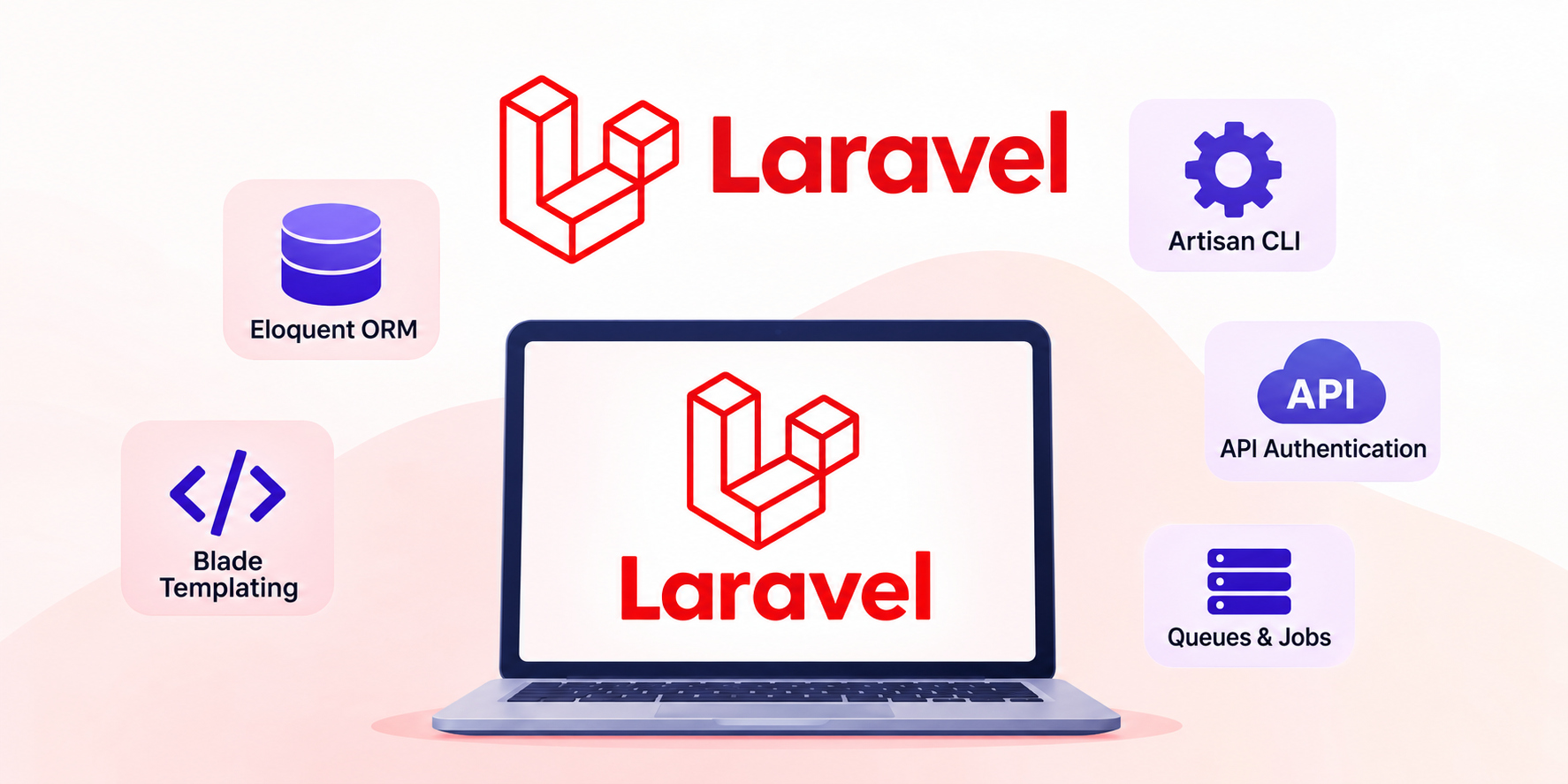
- Eloquent ORM: One of the most elegant database abstraction layers in any framework — clean, readable, and powerful
- Artisan CLI: Command-line tool for generating boilerplate, running migrations, clearing cache, and hundreds of other tasks
- Blade templating: Fast, clean, component-based template engine
- Laravel Sanctum and Passport: First-class API authentication for SPA and mobile app backends
- Queues and jobs: Built-in background job processing with drivers for Redis, SQS, and database
- Laravel Forge and Envoyer: Official deployment and server management tools
- Livewire: Build dynamic, reactive UI components without writing JavaScript
- Laravel Sail: Docker-based development environment for consistent local setup
- SaaS applications: Laravel's built-in authentication, billing integration via Cashier, and team management make it the fastest framework for launching subscription-based products
- REST APIs: Used by mobile app teams who need a well-structured, authenticated PHP API backend
- E-commerce platforms: Custom store backends with complex product, inventory, and checkout logic
- Internal business tools: Admin panels, dashboards, and workflow automation tools where developer productivity matters more than raw performance
Get started: laravel.com
2. Symfony — Best PHP Framework for Enterprise Applications
Released: 2005 Current version: Symfony 7 (2026) Best for: Enterprise systems, complex applications, long-lived codebases, API platforms
Symfony is the most mature and architecturally serious PHP framework available. Where Laravel optimises for developer productivity and expressiveness, Symfony optimises for flexibility, correctness, and long-term maintainability in large, complex systems.
It is built around reusable components — and those components are so well-regarded that Laravel itself is built on top of several of them. Many other PHP frameworks and projects use Symfony components under the hood.
Key features:
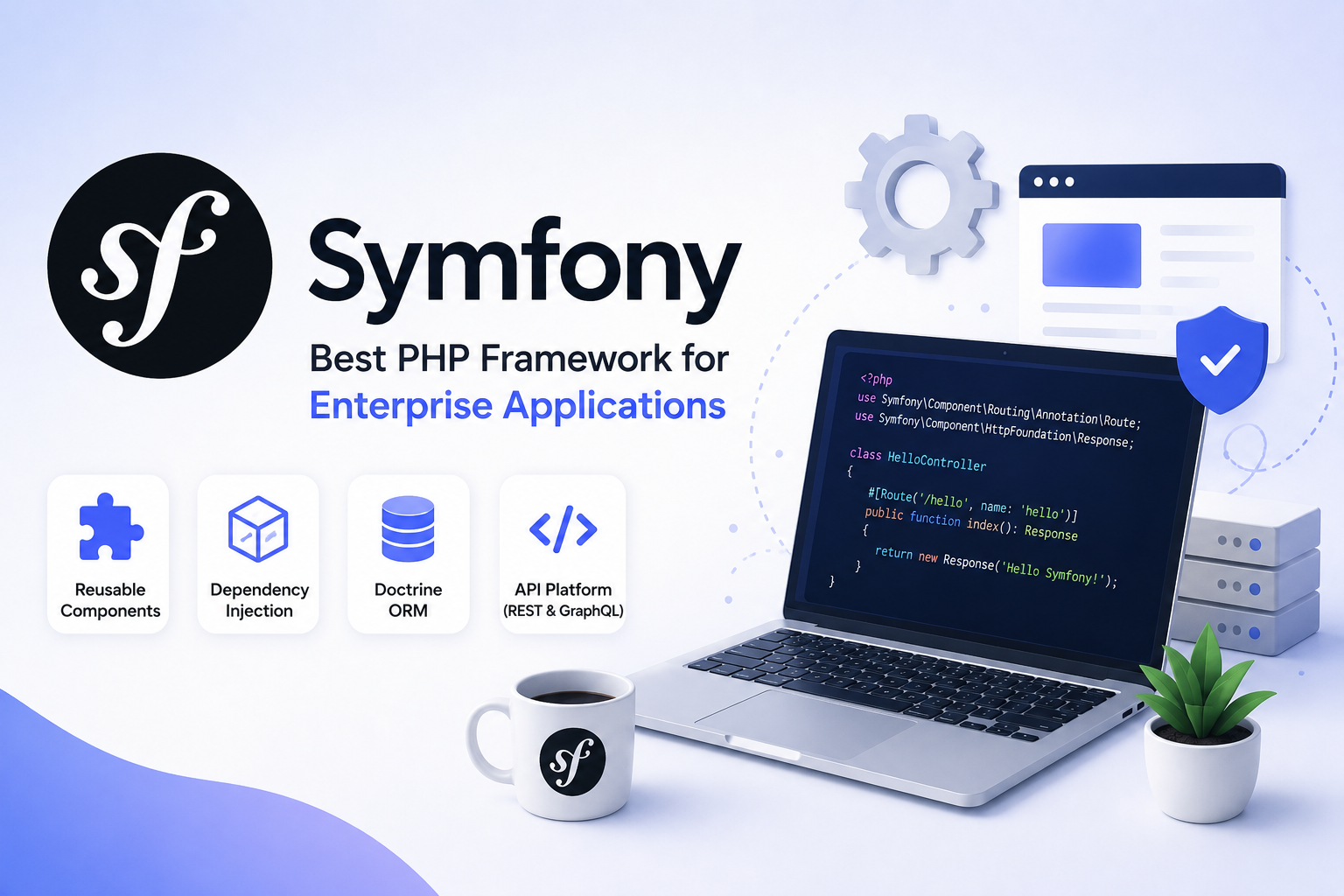
- Symfony Components: Over 50 standalone, reusable PHP components each with their own documentation and test coverage
- Dependency injection container: One of the most sophisticated DI systems in PHP — powerful for large applications with complex service graphs
- Doctrine ORM: The gold standard PHP ORM for complex database schemas and enterprise-level data management
- API Platform: Built on Symfony, generates fully-featured REST and GraphQL APIs from annotated PHP classes with minimal code
- Long-term support releases: LTS versions supported for 4 years — critical for enterprise projects that cannot upgrade constantly
- Maker bundle: Code generation tool that scaffolds controllers, entities, forms, and tests
- Enterprise CRM and ERP systems: Complex business logic, multiple service integrations, and long-lived codebases that need architectural discipline
- API Platform projects: Build complete, standards-compliant REST and GraphQL APIs in hours rather than weeks
- Government and public sector systems: Stability, LTS support, and standards compliance make Symfony a common choice in regulated environments
- Large e-commerce platforms: Used under the hood by Shopware and Akeneo for complex product information and commerce management
Get started: symfony.com
3. CodeIgniter — Best Lightweight PHP Framework for Simple Applications
Released: 2006 Current version: CodeIgniter 4 (2026) Best for: Beginners, simple applications, shared hosting environments, legacy modernisation
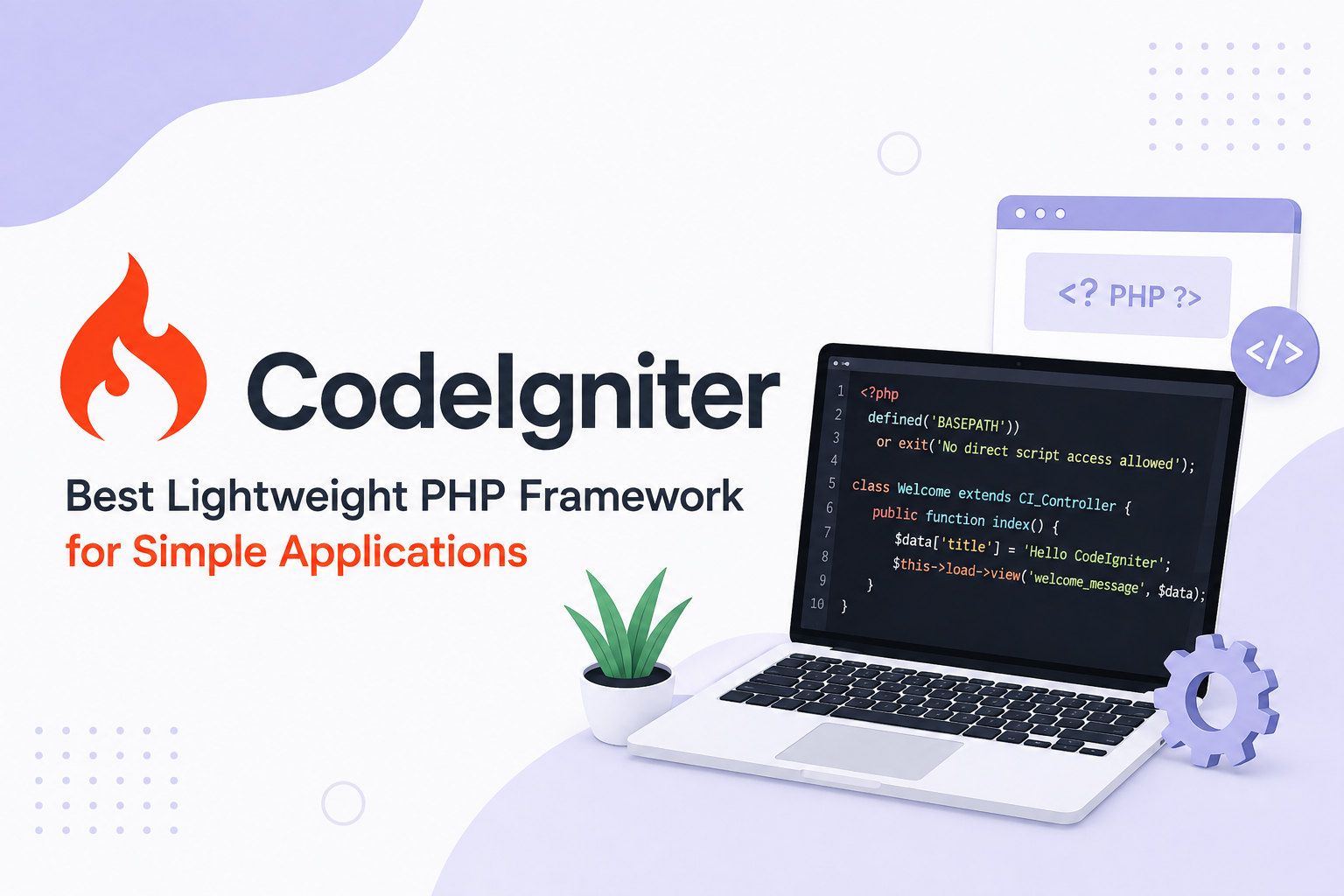
CodeIgniter is the most beginner-friendly PHP framework and the best choice for applications that do not need the full weight of Laravel or Symfony. It has a tiny footprint, minimal configuration requirements, and a gentle learning curve that lets new PHP developers become productive quickly.
It is also one of the few frameworks that runs comfortably on shared hosting without needing special server configuration — an important practical consideration for many smaller projects and agencies.
Key features:
- Tiny footprint: Minimal overhead — loads fast even on shared hosting with limited resources
- Simple MVC structure: Clear, predictable organisation that is easy to explain to developers new to MVC
- Almost zero configuration: Works out of the box with minimal setup compared to heavier frameworks
- Built-in security helpers: XSS filtering, CSRF protection, and input sanitisation included
- Comprehensive documentation: One of the best-documented PHP frameworks, with clear examples at every level
- No dependencies required: Runs on standard PHP without composer being strictly necessary
- Agency projects on shared hosting: Client sites that need to run reliably on standard cPanel or Plesk hosting without DevOps overhead
- Small business websites: Contact forms, simple CMS-backed sites, and brochure websites that do not justify the overhead of Laravel
- Learning PHP frameworks: The simplicity and clear documentation make CodeIgniter the best framework for teaching MVC concepts to PHP beginners
- Modernising legacy PHP code: Teams moving from raw PHP to a structured framework for the first time find CodeIgniter's low learning curve the least disruptive path
Get started: codeigniter.com
4. Slim — Best PHP Framework for Microservices and APIs
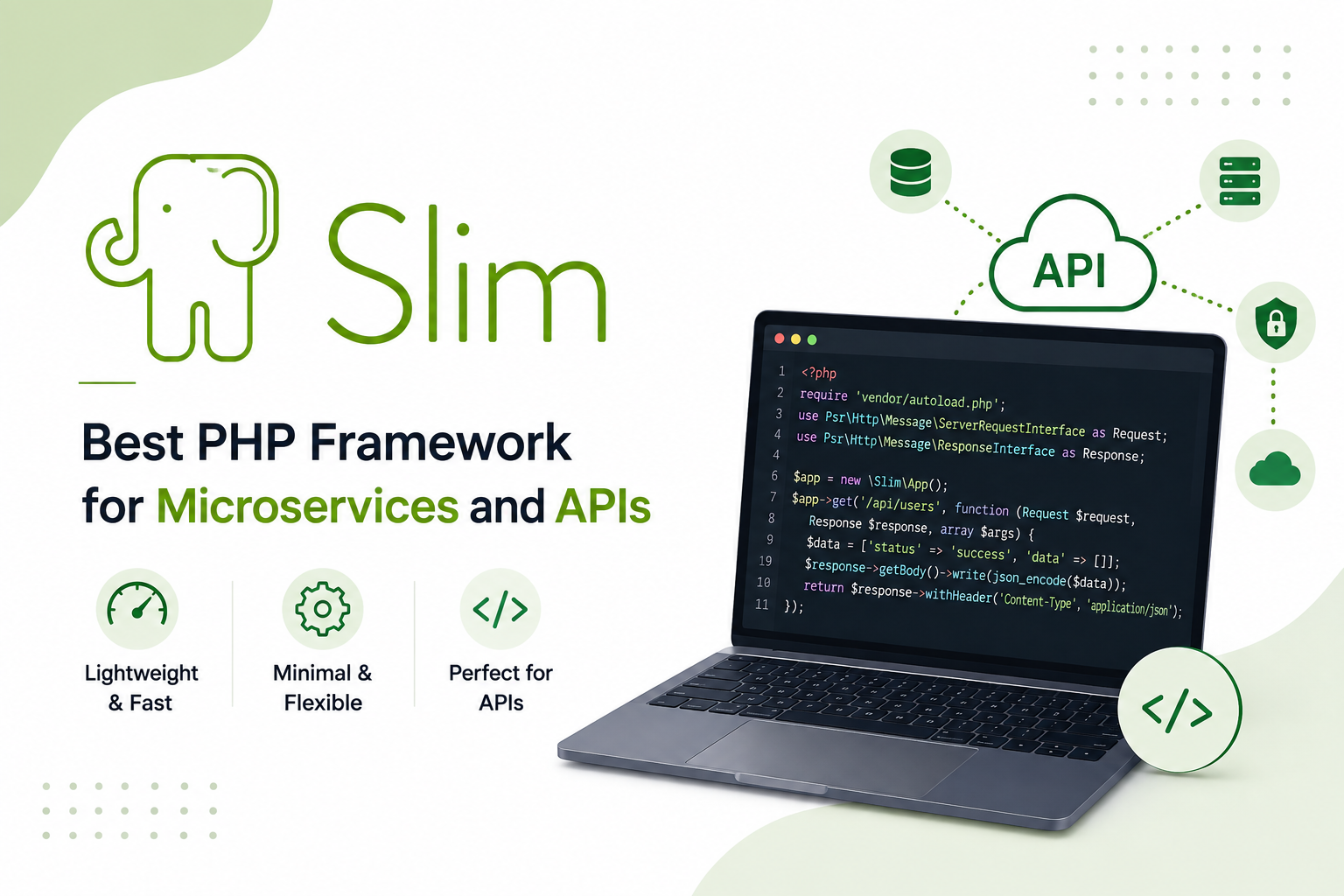
Released: 2011 Current version: Slim 4 (2026) Best for: Microservices, lightweight REST APIs, performance-critical backends, middleware-first architectures
Slim is a micro-framework — the opposite of Laravel's everything-included approach. It provides routing, middleware, and request/response handling, and almost nothing else. What you do not need, you do not pay for in performance or complexity.
This minimalism makes Slim the best choice for API-only backends, microservices, and any situation where raw performance and minimal overhead matter more than built-in developer conveniences.
Key features:
- PSR-7 and PSR-15 compliance: Standards-compliant request, response, and middleware handling
- Middleware stack: Compose application behaviour from independent, testable middleware layers
- Dependency injection container: Ships with PHP-DI by default, with support for any PSR-11 compatible container
- Routing: Fast, flexible routing with parameter capture and route grouping
- Near-zero overhead: Extremely fast bootstrap time — critical for high-frequency API endpoints
- Microservice backends: Individual services in a microservice architecture where each service does one thing and does it fast
- API gateways: Thin API layers that authenticate requests, transform data, and proxy to internal services
- Webhooks and event handlers: Lightweight endpoints that receive, validate, and process events from external services
- High-traffic REST APIs: Where response time is measured in milliseconds and every framework overhead matters
Get started: slimframework.com
5. Yii2 — Best PHP Framework for High-Performance Applications
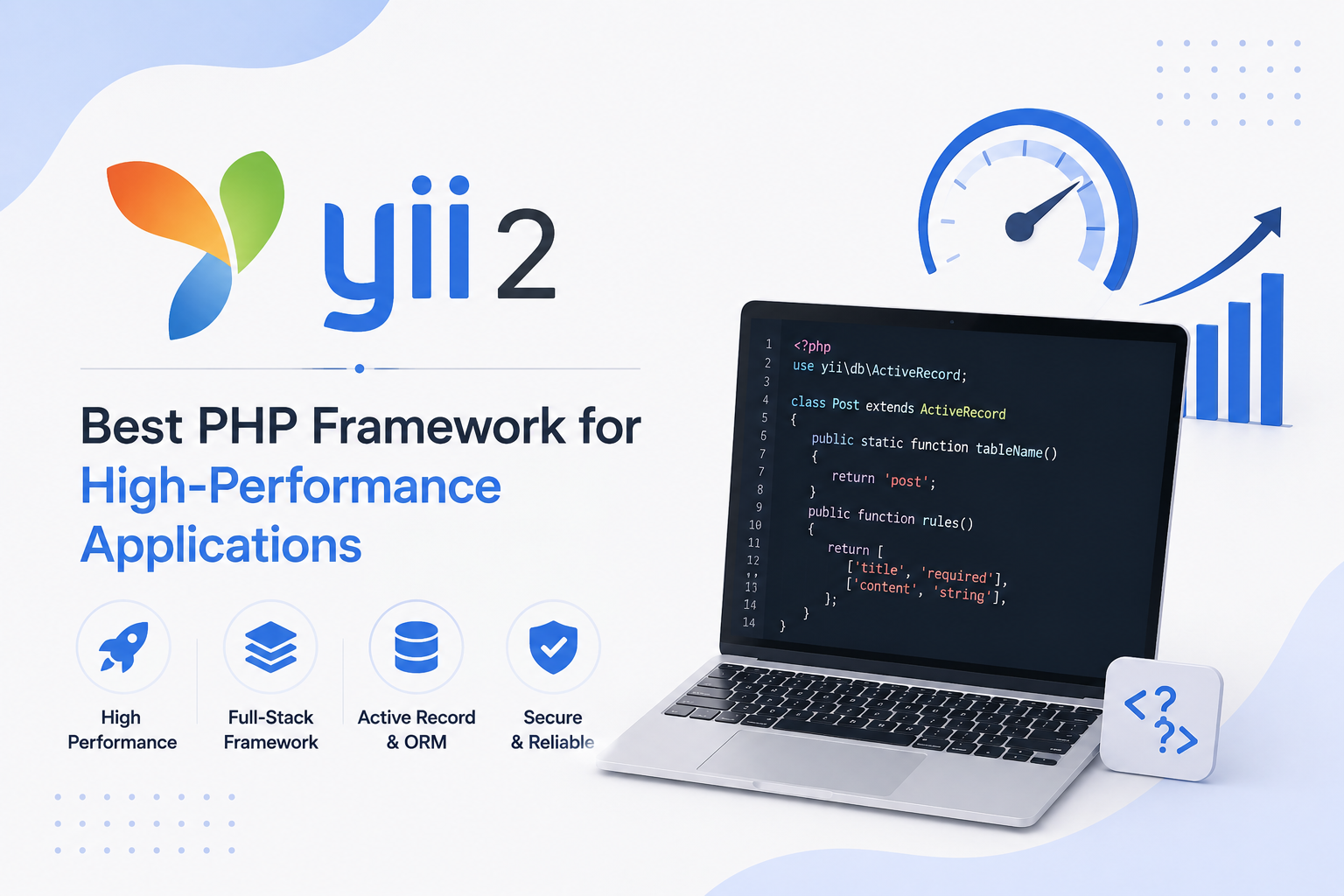
Released: 2008 (Yii2 in 2014) Current version: Yii 2.0 (Yii3 in active development) Best for: High-performance web applications, portals, rapid development with scaffolding
Yii2 is a high-performance, component-based PHP framework that balances developer productivity with raw performance. It is particularly well regarded for its Gii code generator — a visual scaffolding tool that generates models, controllers, CRUD interfaces, and forms from your database schema, dramatically accelerating the early phases of application development.
Key features:
- Gii code generator: Generate complete CRUD interfaces, models, and controllers from database tables through a web-based UI
- Active Record: Clean, expressive ORM for database operations
- Security: Built-in authentication, role-based access control, and comprehensive security helpers
- Caching: Multi-layer caching support including file, database, Redis, and Memcached backends
- RESTful API framework: First-class support for building RESTful APIs with authentication and rate limiting
- Asset management: Sophisticated handling of CSS, JavaScript, and other frontend assets
- Content portals and publishing platforms: News sites, content management systems, and media portals where high read traffic and fast response times matter
- Admin panels and back-office systems: Gii's CRUD generation makes Yii exceptionally fast for building data-heavy admin interfaces
- Community platforms: Forums, social networks, and membership sites where user interactions and relationships are complex
- RESTful API backends: Applications that need a structured, authenticated API layer with minimal boilerplate
Get started: yiiframework.com
6. CakePHP — Best PHP Framework for Convention-Over-Configuration Development
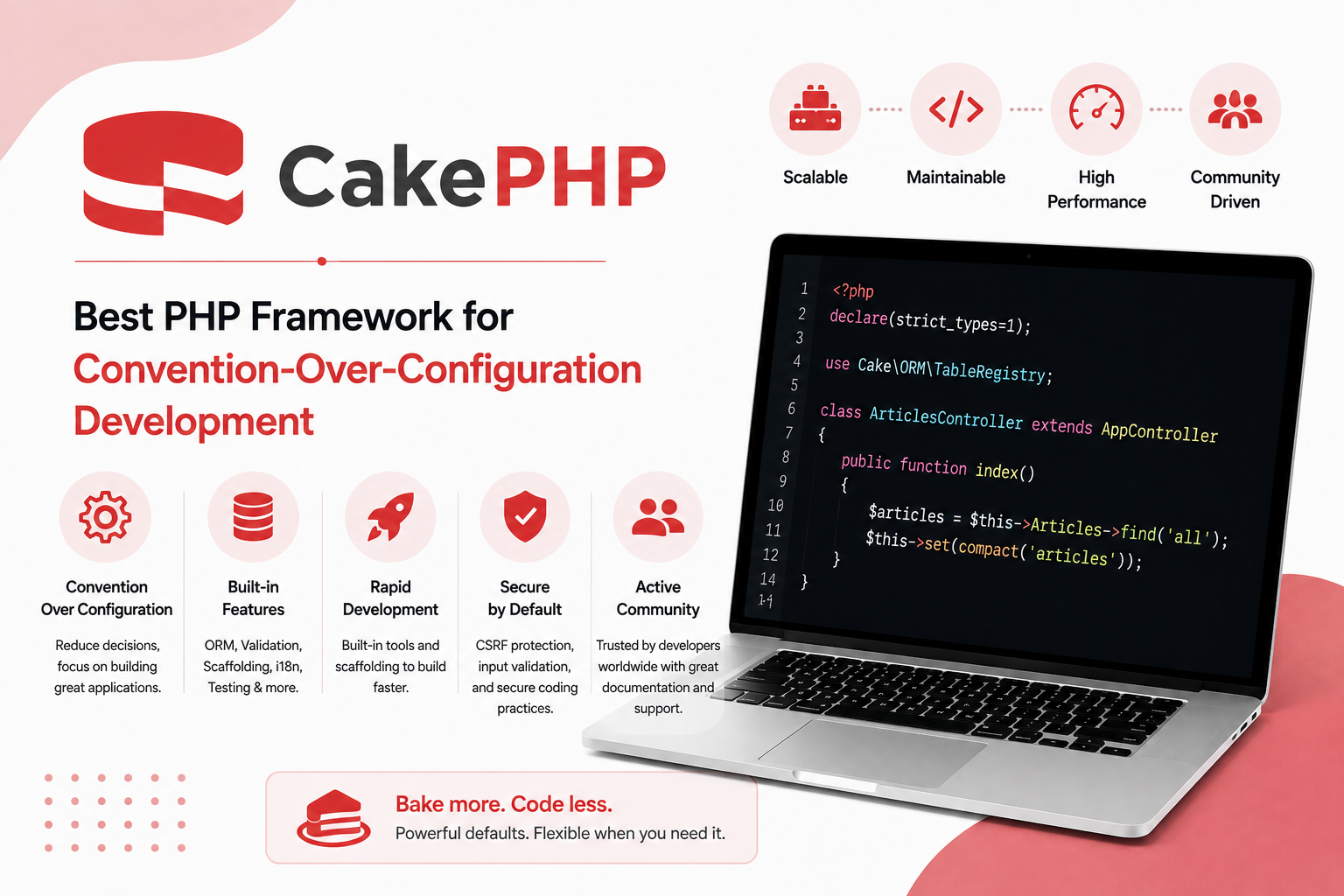
Released: 2005 Current version: CakePHP 5 (2026) Best for: Rapid application development, teams that value strict conventions, established applications
CakePHP was one of the first PHP frameworks to popularise the convention-over-configuration approach — the idea that if you follow the framework's conventions for naming, structure, and organisation, the framework handles most of the wiring automatically without any explicit configuration.
This approach makes CakePHP very fast to get started with for developers who commit to learning and following its conventions. It reduces decisions and reduces the chance of inconsistent approaches across a codebase.
Key features:
- Convention over configuration: Follow the naming conventions and most wiring is automatic
- Bake CLI: Code generation tool similar to Laravel's Artisan for scaffolding models, controllers, and views
- ORM: Powerful built-in ORM with associations, behaviours, and event systems
- Built-in testing: PHPUnit integration out of the box with fixtures and test helpers
- Security component: CSRF protection, form tampering prevention, and input sanitisation built in
- Plugin system: Modular architecture where features can be packaged and reused as plugins
- Rapid prototyping: Convention-heavy approach lets teams produce working prototypes very quickly
- Content management systems: Custom CMS platforms where content modelling, user roles, and media management are the primary concerns
- E-commerce backends: Product catalogues, order management, and customer data management
- Internal data management tools: Applications where staff manage large volumes of structured data through CRUD interfaces
Get started: cakephp.org
7. Lumen — Best PHP Micro-Framework for Laravel Ecosystem Teams
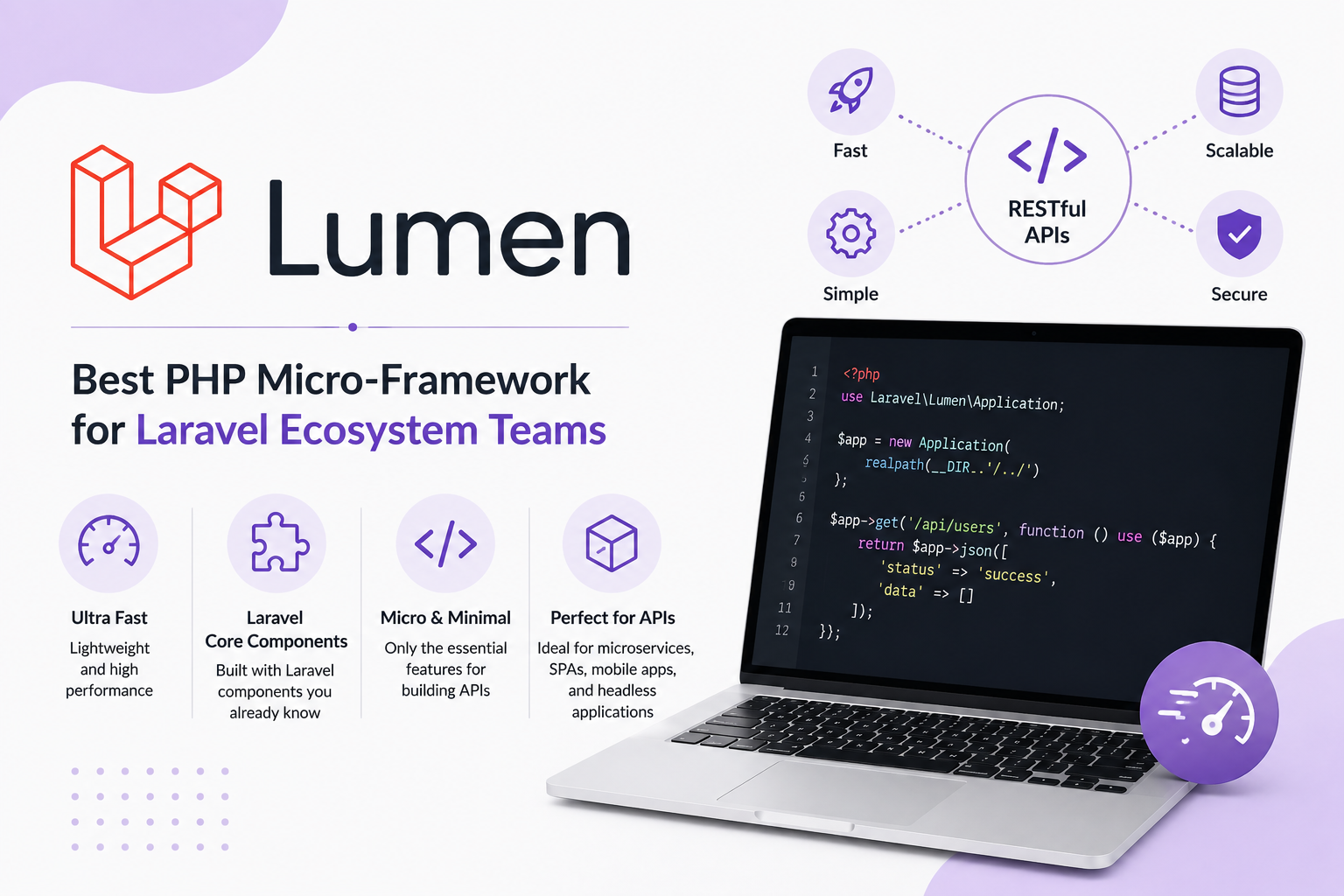
Developer: Taylor Otwell (Laravel creator) Released: 2015 Best for: Microservices within Laravel ecosystems, high-performance APIs that share Laravel conventions
Lumen is Laravel's official micro-framework — built by the same creator, following the same conventions, but stripped down to a fraction of the size and overhead. It provides routing, middleware, Eloquent ORM, and a handful of other essentials from Laravel, without the full application stack.
The key advantage of Lumen over alternatives like Slim is familiarity for Laravel developers. If your team already knows Laravel, Lumen requires almost no relearning — the conventions, helpers, and ORM work identically.
Key features:
- Laravel conventions: Same routing syntax, same Eloquent ORM, same helpers — zero relearning for Laravel developers
- Extremely fast bootstrap: Significantly faster than full Laravel for API-only workloads
- Selective feature loading: Enable only the features you need — authentication, caching, queues — and pay no overhead for what you do not
- Same testing approach: PHPUnit tests written the same way as in full Laravel applications
- Eloquent ORM: Full Eloquent available for database operations with the same syntax as Laravel
- API services within Laravel monoliths being broken into microservices: Teams that built on Laravel and want consistent conventions as they extract services
- High-traffic API endpoints: Token validation services, notification senders, webhook receivers — where speed matters and full Laravel is overkill
- Background service workers: Services that process queued jobs from a main Laravel application
Get started: lumen.laravel.com
Which PHP Framework Should You Choose?
| Your Situation | Best Choice |
|---|---|
| Building a SaaS or full-stack web app | Laravel |
| Building an enterprise or complex system | Symfony |
| Learning PHP frameworks for the first time | CodeIgniter |
| Building microservices or lightweight APIs | Slim |
| Need fast scaffolding and high performance | Yii2 |
| Rapid development with strong conventions | CakePHP |
| Fast APIs within a Laravel ecosystem | Lumen |
For most developers starting a new project in 2026, Laravel is the safest and most productive default. It has the largest community, the richest ecosystem, the best documentation, and the widest range of official first-party packages. The only reasons to reach for something else are specific requirements — enterprise architectural discipline (Symfony), extreme performance needs (Slim), beginner-friendliness (CodeIgniter), or existing team expertise.
Is PHP Still Worth Learning in 2026?
Yes — emphatically. PHP remains one of the most practical languages to learn for web development:
- Over 75% of websites with a known server-side language use PHP
- WordPress, the most widely deployed CMS in the world, is built on PHP
- Laravel has consistently ranked among the most beloved web frameworks in Stack Overflow's developer surveys
- PHP 8.x introduced significant modern language features — fibers, enums, named arguments, match expressions — that make modern PHP genuinely pleasant to write
- The job market for experienced PHP developers remains healthy, particularly in agencies, e-commerce, and enterprise environments
Frequently Asked Questions
Which PHP framework is most popular in 2026?
Laravel is the most popular PHP framework by active usage, GitHub stars, community size, and job market demand. It has led PHP framework rankings for several consecutive years.
Is Laravel better than Symfony?
For most projects, Laravel is more productive. For large enterprise systems with complex requirements and long maintenance horizons, Symfony's architectural discipline is often worth the additional setup cost. They serve different primary use cases rather than competing directly.
Can I learn PHP without a framework first?
Yes, and many experienced developers recommend it. Understanding raw PHP — how requests work, how sessions work, how SQL queries work — gives you a much clearer picture of what frameworks are actually doing. A few weeks of raw PHP before picking up Laravel makes the framework's abstractions far easier to understand.
Which PHP framework is best for REST APIs?
Slim for pure API performance. Laravel for full-featured APIs with authentication, queuing, and ecosystem depth. Symfony's API Platform for automatically generating standards-compliant REST and GraphQL APIs from annotated PHP models.
Which PHP framework is easiest to learn?
CodeIgniter is the most beginner-friendly with the lowest learning curve. Laravel is the best investment of learning time for anyone who wants to build production applications — its documentation, tutorials, and community resources make it very learnable despite covering more ground.
Is PHP good for large applications?
Yes. Symfony and Laravel both power large-scale applications with millions of users. PHP's performance has improved dramatically in recent versions — PHP 8.x is significantly faster than PHP 7.x — and frameworks like Laravel have mature solutions for caching, queuing, horizontal scaling, and performance optimisation.
Justin is a self-taught developer who builds and runs DeelCart himself — from the articles to the server it runs on. He manages his own Linux infrastructure and writes guides based on tools and workflows he actually uses day to day.